A side project by Md Ashik
Dispatch

Section

Science

ScienceThe Guardian — Science

Red hair gene favoured by natural selection over last 10,000 years, study finds

Scientists who analysed nearly 16,000 ancient remains suggest red hair and fair skin is favoured for vitamin D production People with red hair who have put up with teasing or “fiery” stereotypes may be pleased to learn that they appear to be winners from an evolutionary perspective. A large genetics study has revealed that, in Europe, the gene for red hair has been actively selected for more than 10,000 years. The study did not aim to uncover the reasons for the trend, but focused on the broade…

ScienceThe Guardian — Science

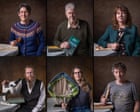
In the footsteps of Linnaeus: scientists share their passion for species from tiny wasps to hairy plants – in pictures

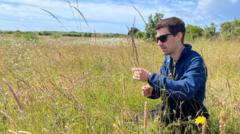
For his project ‘De Oförtrutna’ (The Relentless), photographer Christer Björkman pictured Swedish scientists working in the spirit of Carl Linnaeus, the botanist who created the modern taxonomic system that classifies organisms based on appearance. Each scientist brought to the shoot a book and an item of importance to their work Continue reading...

ScienceThe Guardian — Science

The surprising value of boring chats, ‘super El Niño’ and Alzheimer’s evidence reviewed – podcast

Madeleine Finlay sits down with co-host and science editor Ian Sample to discuss three eye-catching stories from the week, including a review into the effectiveness of a new class of Alzheimer’s drug that was once hailed as a game-changer in slowing the progress of the disease. Also on the agenda is the news that the world could be heading for a ‘super El Niño’ this summer and a study exploring whether conversations about dull topics really are as boring as we expect them to be Hate small talk?…

ScienceThe Guardian — Science

Can you stop malaria crossing borders? One nation’s bid to wipe out the disease

Informal migration, plus climate change and rising numbers of cases globally, are complicating the tireless efforts of landlocked Eswatini to eradicate the killer disease The freezer is filled with blue-lidded tubes of cows’ blood, ready to be defrosted and used to feed the colony of mosquitoes. “Also, you can use your arm,” says Nombuso Princess Bhembe, who tends the mosquitoes at Eswatini’s national insectary, an unremarkable building in the town of Siphofaneni, part of the southern African c…

ScienceThe Guardian — Science

Effect of ‘gamechanger’ Alzheimer’s drugs ‘trivial’, review concludes

Data assessed from 17 clinical trials of anti-amyloid drugs found no ‘meaningful effect’ on cognitive decline Drugs that have been hailed as a gamechanger for the treatment of Alzheimer’s disease make no noticeable difference to patients, according to an extensive review. The analysis of clinical trials in people with mild cognitive impairment or mild dementia found that the effects of anti-amyloid drugs on cognition and dementia severity over 18 months were “trivial”, with improvements in func…

ScienceThe Guardian — Science

Critical Atlantic current significantly more likely to collapse than thought

Scientists say finding is ‘very concerning’ as collapse would be catastrophic for Europe, Africa and the Americas The critical Atlantic current system appears significantly more likely to collapse than previously thought after new research found that climate models predicting the biggest slowdown are the most realistic. Scientists called the new finding “very concerning” as a collapse would have catastrophic consequences for Europe, Africa and the Americas. The Atlantic meridional overturning c…

ScienceThe Guardian — Science

The Guardian view on social science research: embracing uncertainty | Editorial

Science rarely produces identical outcomes. Mistaking this for failure turns caution into an excuse for inaction A new set of studies out this month suggests that as many as half of all results published in reputable journals in the social sciences can’t be replicated by independent analysis. This is part of a long-running problem across many research fields – most visibly in the social sciences and psychology, though concerns have also been raised in areas of biomedical research. The latest wo…

ScienceThe Guardian — Science

We can prove which twin fathered the child in this paternity dispute | Letter

Prof Michael Krawczak says the required molecular genetic testing comes at a cost, but should not be ruled out as it was in a recent court case I read with great astonishment your article regarding the court of appeal’s decision on proving paternity in the case of a child whose father could be either one of a pair of monozygotic twins (Court of appeal says it cannot rule on which identical twin fathered a child, 30 April). I was particularly surprised by the court’s statement that it was “not p…

ScienceThe Guardian — Science

Sperm whales’ communication closely parallels human language, study finds

Analysis shows whales’ coda vocalizations are ‘highly complex’ and remarkably similar to our own We may appear to have little in common with sperm whales – enormous, ocean-dwelling animals that last shared a common ancestor with humans more than 90 million years ago. But the whales’ vocalized communications are remarkably similar to our own, researchers have discovered. Not only do sperm whale have a form of “alphabet” and form vowels within their vocalizations but the structure of these vowels…

ScienceThe Guardian — Science

Amazon to buy satellite firm Globalstar for $11.57bn in challenge to Musk’s Starlink

Deal, subject to regulatory approval, would give Bezos firm access to Globalstar’s network of two dozen satellites Amazon said on Tuesday it would acquire a satellite company in an $11.57bn deal, bolstering its own fledgling space business as it looks to take on Elon Musk-led bigger rival Starlink. The deal gives Amazon access to Globalstar’s network of two dozen satellites, boosting the tech giant’s ambitions to challenge SpaceX unit Starlink, which currently has about 10,000 units in orbit. C…

ScienceThe Guardian — Science

AI learns language from skewed sources. That could change how we humans speak – and think | Bruce Schneier

Large language models aren’t trained on real-life conversations. As we encounter their language, it could affect our own Because of the way they are trained, large language models capture only a slice of human language. They’re trained on the written word, from textbooks to social media posts, and our speech as captured in movies and on television. These models have minimal access to the unscripted conversations we have face to face or voice to voice. This is the vast majority of speech, and a…

ScienceThe Guardian — Science

‘Suddenly, boom, it’s completely warm’: summers are getting longer – especially in Sydney, study finds

Researchers examined trends in 10 global cities, with Sydney’s summer growing at two-and-a-half times the average Scientist Ted Scott could feel that summers in his home state of Minnesota were not what they used to be. With the climate crisis accelerating, Scott could feel and see the seasons changing from their usual patterns – especially summer – and he wanted to know what the data said. Continue reading...

ScienceThe Guardian — Science

Helium: the invisible gas that powers AI, and why it’s in short supply – podcast

Alongside the oil and gas stranded in the strait of Hormuz is another commodity vital to today’s economy: helium. It is a critical element in all kinds of areas from MRI machines to the Large Hadron Collider, and even deep-sea diving. It is also integral to the AI boom. And this isn’t the first time its fragile global supply chain has been threatened. So why is helium so useful, and what will happen if the shortage continues? Ian Sample hears from co-host Madeleine Finlay, and from Sophia Hayes…

ScienceThe Guardian — Science

Almost 2bn to be affected by metabolic liver disease by 2050, study suggests

MASLD affects one in six people now and is projected to rise because of population growth, obesity and high blood sugar Metabolic liver disease will affect 1.8 billion people worldwide by 2050, driven by rising obesity and blood sugar levels, a study suggests. Metabolic dysfunction-associated steatotic liver disease (MASLD), previously known as non-alcoholic fatty liver disease (NAFLD), is one of the most prevalent and rapidly growing liver conditions globally, according to the research. Contin…

ScienceThe Guardian — Science

Taking Tylenol during pregnancy has no link to autism, new study finds

Trump has pushed unfounded claims of Tylenol use in pregnancy being tied to ‘a very increased risk of autism’ Taking acetaminophen – known in the US by the brand name Tylenol – during pregnancy has no effect on later autism diagnoses, according to a sweeping new study from Denmark published on Monday. The Trump administration has targeted Tylenol use in pregnancy as a major cause of autism in children, which appears to have led to a drop in pregnant people taking the pain reliever. Continue rea…

ScienceThe Guardian — Science

This week saw humanity at its worst. Artemis II told the opposite story | Flynn Coleman

We send the voice of the dead across space as an act of continuity and care, while on Earth we tally the bodies. Which do we choose to become? Four people are sleeping 19,000 miles from the moon when the voice of Apollo 13’s commander arrives. “Hello, Artemis II. This is Apollo astronaut Jim Lovell. Welcome to my old neighborhood.” Flynn Coleman is an international human rights lawyer, political scientist and the author of A Human Algorithm Continue reading...

ScienceThe Guardian — Science

Can you solve it? Are you smarter than a Navy admiral?

A trio of tricky teasers UPDATE: Solutions are now up Tanya Khovanova is a luminary of the recreational mathematics scene. She is one of its foremost bloggers and also runs Number Gossip, a site where you can submit a number and she “will tell you everything you want to know about it but were afraid to ask.” Tanya has now written her first book, Mathematical Puzzles and Curiosities, in collaboration with two other puzzle enthusiasts, Ivo David and Yogev Shpilman. It’s packed with fantastic new…

ScienceThe Guardian — Science

The Artemis II crew made it through 10 days in space – but could they have survived my first office job? | Polly Hudson

Confined quarters, rising tensions and no escape: the astronauts were trained for it. I had a desk, a drawer and a long-running feud over a window that pushed me to my limits Four people have joined the tiny percentage of humans who can say they have come back to Earth with a bump, literally. Welcome home, Artemis II crew: you have much to be proud of after following in the illustrious footsteps of Katy Perry and Jeff Bezos’s missus. Most importantly, you survived. Not in space – although obvio…

ScienceThe Guardian — Science

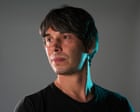
Brian Cox: ‘We don’t know how powerful AI is going to become – it’s both exciting and potentially a problem’

The physicist, BBC presenter and author on snowflakes, art v science and the time Paul McCartney quizzed him about one of Saturn’s moons What is the inspiration behind your latest live show, Emergence? It came from a book that I’ve loved for years: The Six-Cornered Snowflake by Johannes Kepler. Kepler is most famous for his laws of planetary motion in and around 1610, but he wrote this little book about New Year’s Eve in 1609, when he was walking across the Charles Bridge in Prague in a snowsto…

ScienceThe Guardian — Science

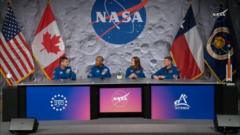
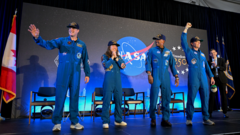
Artemis II crew on inspiring the next generation and unifying humanity – video

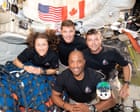
As the Artemis II mission enters flight day nine, the crew spoke about inspiring the next generation and 'working on something big for the good of everyone' ahead of their return to earth. The crew, made up of three US astronauts and a Canadian, embarked on humanity's first crewed lunar voyage in more than half a century. The 10-day flight around the moon and back will mark the second mission of Artemis, successor to the Apollo program of the cold war era Artemis II crew to return home as Nasa…